Note: I originally published a version of this story on the Femmes Fatales blog site. As that wonderful bunch of talented writers is no longer blogging as a group, and in light of the latest film version of The Odyssey, I thought I’d dust it off, tidy it up, and repost it here.
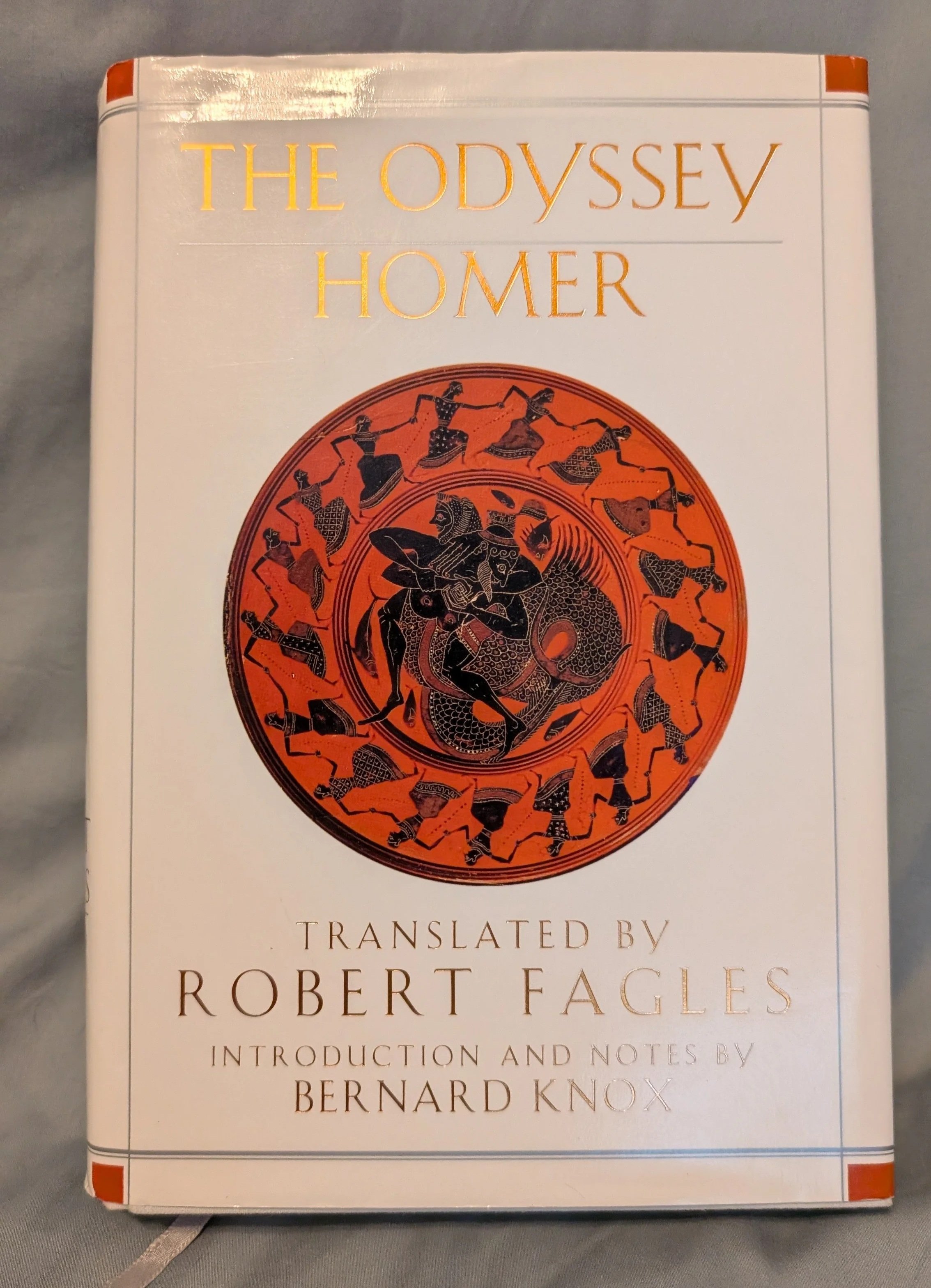
One spring Saturday morning, a looong time ago, I boarded an early train in Liverpool for London. I usually travel very light, but I brought my hardcover copy of Robert Fagles’ translation of The Odyssey with me. It’s a big book—remember, this was before e-readers and cell phones, at least before I had them—but I couldn’t bear to leave the book behind for the month I’d be researching. I was the only one in the car, and was looking forward to a little quality reading time.
All of a sudden, the train was swarmed with very large, very rowdy Liverpool football supporters. They were apparently traveling to an away match, and although it was only 7am, they were seriously drunk. Not giddy, or in high spirits. They were plastered like they’d been drinking since Thursday, cans of lager in hand, flasks being handed around. Playful scuffles broke out, but then something angry started happening one car up. I looked around: There was nowhere to escape to, no sign of the conductor, and I suddenly felt like I was the only woman around for miles. Probably the only one on the train.
Then I noticed guys elbowing each other and gesturing at me. As the train pulled out, I became seriously worried: the only way I could have been more obviously out of place was if I had been served up on toast points, wearing nothing but a Manchester United scarf. The harassed conductor arrived, took one look at me and announced, “behave yourselves, there’s a lady here!” Which only pinpointed my location and underscored the fact that I was alone. He was answered with laughter and jeers. I asked if there was anywhere else to sit, and he said no, the whole train was like that.
Shit.
All my instincts were screaming “trouble,” but there was nothing else to do. I kept my head down, trying to hide behind my book, figuring if anyone tried anything, I'd cosh him with over five hundred pages of translated poetry, notes, and maps.
The noise continued, getting even worse as we traveled. But I was also getting sucked into the story again, and against the odds, eventually, forgot where I was. Not smart, really, but I didn't have many options. I got near the end, where Odysseus, who’s been away for twenty years, has to prove who he is to his wife Penelope. Remember, I’d been traveling for a couple of weeks and was feeling pretty lonely and homesick. Odysseus described how he constructed their wedding bed from a living olive tree, and when she recognized him:
Living proof--Penelope felt her knees go slack, her heart surrender/recognizing the strong clear signs Odysseus offered.
At this point, I was totally immersed in that amazing, epic scene, actually sobbing, nose running, a mess. And it's only when I realized I couldn't breathe for want of a hankie, that I noticed...
The car had gone dead silent. Not only was there no noise but me crying (and I do not cry pretty), but seats had been vacated around me, creating a no-go zone. Men stared, horror-stricken, completely unsure what to do about the hysterically crying woman in the corner.
I snuffled again, and thought: I’ll take it.
Shortly after, the muted football rowdies reached their stop, and I eventually arrived, safely, in London.
This may be a moral about the power of poetry, or about carrying a whacking great book for protection. Probably it’s closer to knowing the utility of playing to your strengths and weaknesses. Maybe it was Athena, “bright-eyed Pallas,” watching over me (“no warrior, you, little one/I’ll gift you with tears and bounteous phlegm/and your enemies will run, unmanned”). That's something I’ve used in my writing ever since then (no, not the snot): Strength is well and good, but power takes many forms and surprise can make them effective.
